
Whether you’re sourcing products for retail shelves, developing a private-label party collection, or expanding a wholesale party supplies portfolio, self-inflating balloons offer a practical alternative to traditional air-filled and helium palloncini. Unlike conventional balloons that require pumps or helium cylinders, self-inflating balloons generate carbon dioxide through a sealed chemical reaction, allowing users to activate the balloon in seconds without additional equipment.
As consumers increasingly value convenience, interactive experiences, and ready-to-use products, self-inflating balloons have become popular across birthday parties, holiday celebrations, promotional giveaways, gift packaging, and seasonal retail programs. For distributors and OEM buyers, they also provide important commercial advantages, including compact transportation, long shelf stability before activation, customizable packaging, and flexible branding opportunities.
However, not all self-inflating balloons deliver the same performance. Inflation consistency, sealing quality, chemical formulation, and manufacturing precision all influence the final customer experience. Understanding how these products work—and what separates a reliable manufacturer from an average supplier—can help buyers make better sourcing decisions while reducing product complaints and improving long-term retail performance.
Risposta rapida
Self-inflating balloons are foil balloons that automatically inflate through a sealed chemical reaction between citric acid and sodium bicarbonate. When activated, the internal pouch releases the solution, producing carbon dioxide that expands the balloon without requiring helium or an air pump. Because they are compact before activation, easy to transport, and suitable for private-label customization, self-inflating balloons are widely used in forniture per feste di compleanno, promotional events, seasonal retail collections, and wholesale party supplies.
What Are Self-Inflating Balloons?
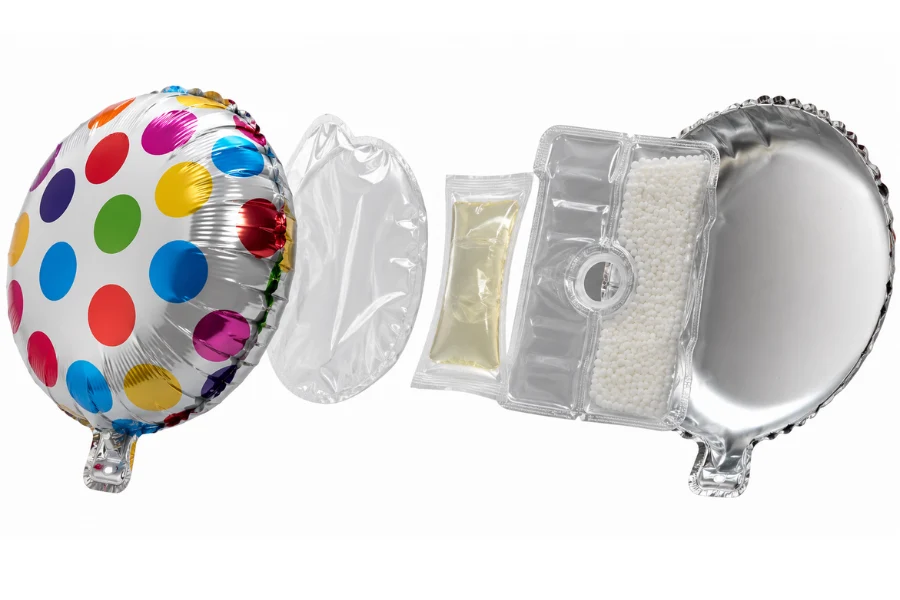
Self-inflating balloons are a type of self-inflating foil balloon designed with an integrated inflation system that eliminates the need for external inflation equipment. Instead of relying on manual pumps or helium cylinders, these balloons contain separated chemical components that react only after activation, producing carbon dioxide (CO₂) inside the sealed balloon.
The concept combines simple chemistry with practical product engineering. Before use, the reactive materials remain isolated inside an internal pouch, allowing the balloon to be stored flat for extended periods. Once activated, the chemical reaction generates sufficient gas to inflate the balloon to its intended shape. This activation method is consistent with both the educational references and commercial self-inflating balloon products discussed in the source materials.
Compared with conventional foil balloons, chemical self-inflating balloons provide several practical advantages:
- No helium required
- No manual or electric pump required
- Compact flat packaging before use
- Easy transportation and storage
- Simple activation for consumers
- Suitable for OEM and private-label retail programs
Because of these benefits, self-inflating party balloons have evolved beyond novelty products and are now widely used in party decorations, retail gift packs, promotional campaigns, children’s activities, and seasonal merchandise.
Key Components
Although the inflation process appears simple to consumers, every self-inflating balloon contains multiple engineered components that work together to deliver consistent inflation performance.
A typical self-inflating balloon consists of:
- Foil laminate balloon body with excellent gas barrier properties
- Internal reaction chamber
- Sealed pouch containing citric acid solution
- Sodium bicarbonate stored separately
- Protective outer package
- Heat-sealed inflation structure
The separation of the reactants is particularly important. Until activation, the chemicals remain isolated inside the balloon, preventing premature gas generation during manufacturing, transportation, warehouse storage, and retail display.
For manufacturers, the design of the internal pouch, foil laminate, e heat sealing process plays a critical role in ensuring long shelf stability and reliable inflation after activation.
How Do Self-Inflating Balloons Work?
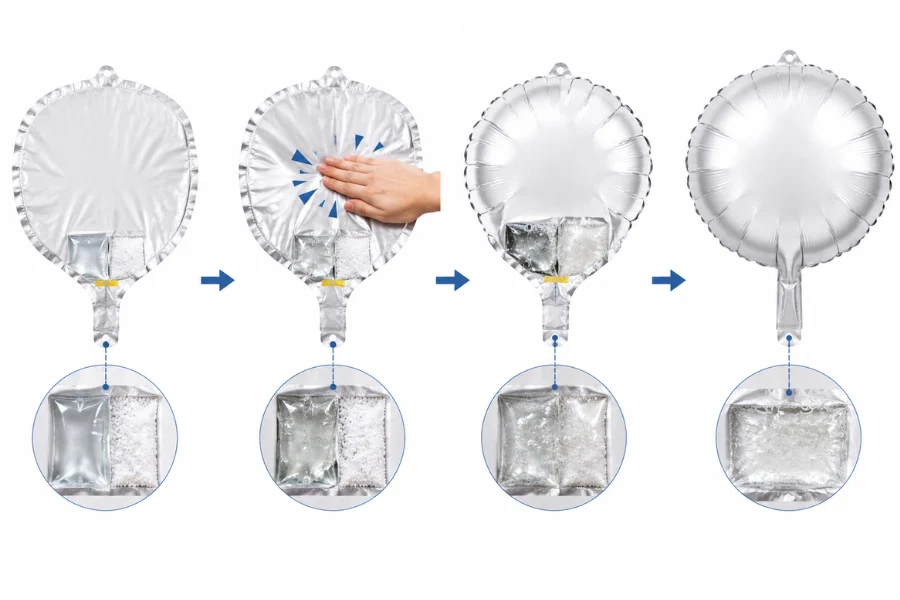
The inflation mechanism relies on a carefully controlled acid-base reaction. Before activation, the citric acid solution is sealed inside a small liquid pouch while sodium bicarbonate remains dry elsewhere inside the reaction chamber. When the user presses or strikes the package, the pouch ruptures, allowing the two substances to mix.
The reaction immediately begins producing carbon dioxide gas, which cannot escape from the sealed foil balloon. As pressure gradually builds, the balloon unfolds and expands until it reaches its designed volume. This chemical inflation principle matches the process described in the reference materials and commercial product instructions.
Unlike helium balloons, which depend on externally supplied lifting gas, self-inflating balloons generate only the volume of gas required for inflation. Manufacturers carefully balance the chemical dosage to ensure the balloon inflates fully without creating excessive internal pressure that could damage the foil seams.
Inflation Timeline
Although the reaction starts almost immediately after activation, the balloon inflates progressively rather than instantaneously.
| Time After Activation | What Happens |
|---|---|
| 0–5 seconds | Internal liquid pouch breaks and reactants begin mixing. |
| 5–30 seconds | Carbon dioxide generation starts inside the reaction chamber. |
| 30–120 seconds | Pressure gradually builds as the balloon unfolds and expands. |
| 2–5 minutes | Balloon reaches its designed inflation volume and display shape. |
Actual inflation speed varies depending on product design, chemical formulation, ambient temperature, and storage conditions.
Why Carbon Dioxide Inflates the Balloon
Carbon dioxide is produced continuously while the citric acid solution reacts with sodium bicarbonate. Since the foil balloon forms a sealed enclosure with excellent gas barrier properties, the generated gas remains inside the balloon instead of escaping.
As internal gas pressure increases, the folded foil gradually opens until the balloon reaches its intended size. Unlike latex balloons, foil balloons exhibit very little elasticity, making precise control of gas generation essential. Excessive pressure may overstress the heat-sealed joints, while insufficient gas can leave the balloon only partially inflated.
For this reason, experienced manufacturers carefully optimize:
- Balloon volume
- Chemical dosage
- Internal pouch size
- Reaction chamber design
- Foil laminate thickness
- Heat-sealing parameters
Balancing these engineering variables ensures consistent inflation performance across large production batches.
Why the Balloon Feels Cool During Inflation
Some users notice that the balloon becomes cool while it inflates. This temperature change occurs because the dissolution of sodium bicarbonate and its reaction with citric acid absorb heat from the surrounding environment. Educational experiments referenced in the source materials show that the coolest area appears near the location where the reactants first mix inside the balloon.
Self-Inflating Balloons vs. Traditional Balloons
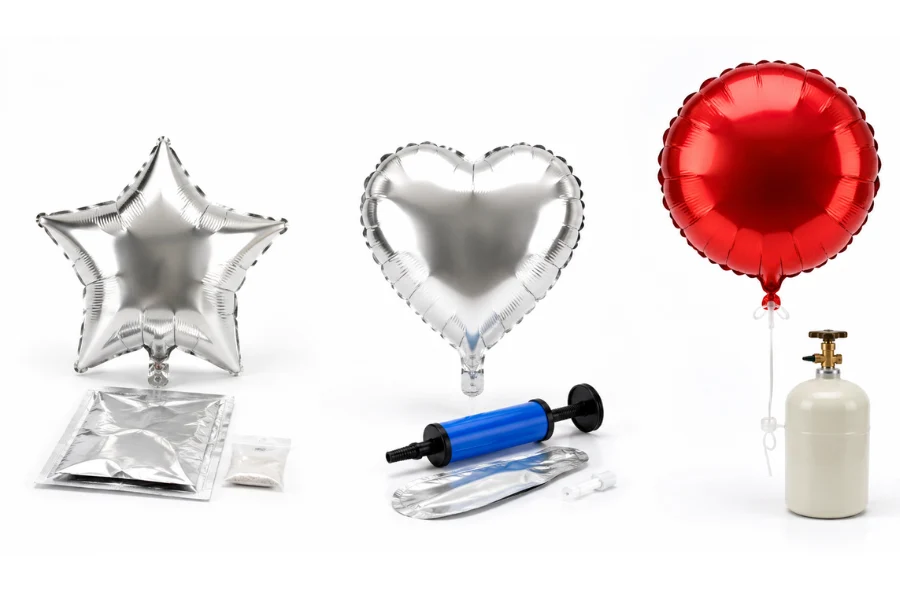
Although self-inflating balloons belong to the broader foil balloon category, they are designed to solve a different problem. Traditional foil balloons depend on external inflation equipment, while self-inflating foil balloons incorporate their own gas-generation system, allowing consumers to inflate the balloon anywhere without pumps or helium.
For wholesalers and retailers, understanding these differences is important when selecting products for different market segments. Helium balloons remain the preferred choice for floating decorations, whereas wholesale self-inflating balloons are better suited for party favors, retail gift packs, promotional campaigns, and travel-friendly celebration kits.
| Caratteristica | Self-Inflating Balloons | Air-Filled Foil Balloons | Helium Foil Balloons |
|---|---|---|---|
| Inflation Method | Internal chemical reaction | Manual air pump | Helium cylinder |
| External Equipment | Not required | Air pump recommended | Helium tank required |
| Floating Capability | No | No | Sì |
| Consumer Convenience | Eccellente | Moderato | Moderato |
| Transportation | Flat-packed | Flat-packed | Usually inflated at destination |
| Storage Before Use | Eccellente | Eccellente | Helium required before display |
| Typical Applications | Party favors, retail gifts, promotions | Balloon walls, hanging decorations | Floating bouquets, event décor |
Rather than replacing traditional balloons, self-inflating balloons complement existing product lines by serving situations where convenience, portability, and ease of use are more important than floating performance.
Advantages of Self-Inflating Balloons
The popularity of self-inflating balloons continues to grow because they simplify both the consumer experience and the retail supply chain. From manufacturing to distribution and final use, these products offer several practical advantages over conventional balloon systems.
No Helium or Inflation Equipment Required
Perhaps the most obvious benefit is that users do not need to purchase or rent additional inflation equipment.
Because the carbon dioxide is generated internally, consumers can activate the balloon almost anywhere without:
- Helium cylinders
- Hand pumps
- Electric inflators
- Inflation stations
This convenience is particularly attractive for home celebrations, classrooms, outdoor events, and locations where helium is unavailable or expensive.
Faster Party Setup
Traditional balloon preparation often involves inflating multiple balloons individually before decorating the venue.
Self-inflating balloons simplify this process considerably. Once activated, they begin inflating automatically, allowing users to prepare decorations more efficiently while reducing setup time.
For event organizers managing large numbers of decorations, this convenience can significantly improve preparation efficiency.
Compact Packaging Improves Logistics
One of the biggest commercial advantages is the flat-packed design before activation.
Compared with pre-inflated balloons, self-inflating balloons require substantially less storage volume throughout the supply chain.
This benefits:
- Manufacturers
- Exporters
- Importers
- Distributors
- Retailers
- E-commerce sellers
Smaller packaging reduces transportation costs while allowing retailers to display more products within limited shelf space.
Excellent Shelf Stability
Because the reactive chemicals remain separated inside the balloon until activation, unopened products maintain excellent shelf stability when stored under appropriate conditions.
Good manufacturing practices, moisture-resistant packaging, and reliable heat sealing help preserve the integrity of the internal pouch over long storage periods.
For seasonal inventory planning, this longer storage life allows wholesalers to manufacture products well before peak holiday demand without significantly affecting product performance.
Attractive Retail Presentation
Foil laminate materials provide several advantages over traditional latex balloons.
Tra questi figurano:
- Metallic finishes
- Bright colors
- Sharp printed graphics
- Excellent shape retention
- Premium appearance
Combined with attractive retail packaging, these characteristics help increase impulse purchases in supermarkets, party stores, gift shops, and seasonal retail displays.
Suitable for Private-Label Programs
Unlike many consumer novelty products, self-inflating balloons are highly adaptable for OEM manufacturing.
Manufacturers can customize:
- Balloon shapes
- Printed artwork
- Loghi dei marchi
- Retail packaging
- Instruction leaflets
- Barcode labels
- Display boxes
This flexibility enables distributors and retailers to build exclusive product collections under their own brands rather than relying on generic catalog products.
What Affects Inflation Performance?
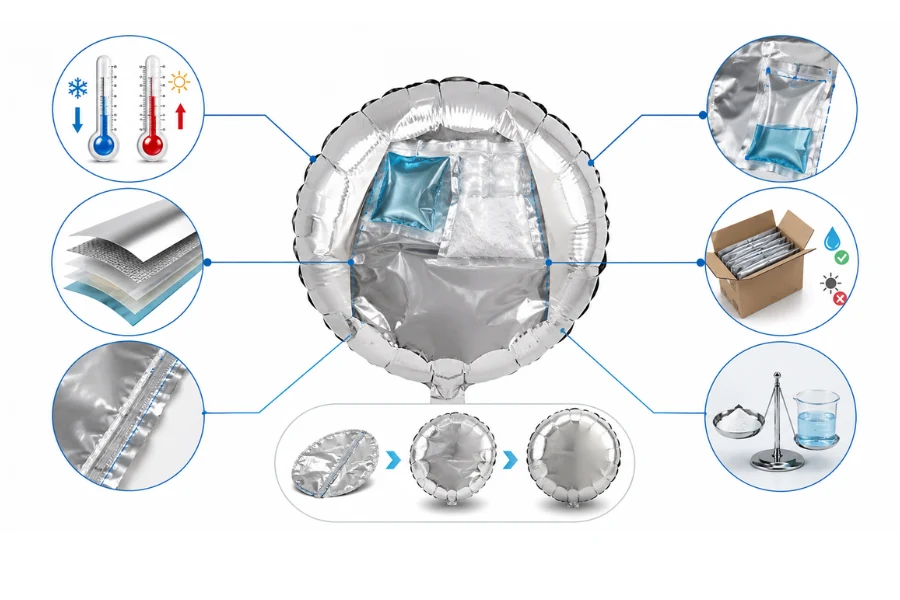
Although activating a self-inflating balloon is simple, achieving consistent inflation requires careful control during manufacturing. Multiple engineering factors influence the amount of carbon dioxide generated, the speed of inflation, and the final appearance of the balloon.
Understanding these variables is particularly valuable for OEM buyers evaluating manufacturing quality.
Temperature
Ambient temperature directly affects the speed of the chemical reaction.
Lower temperatures generally slow the reaction, meaning inflation may take longer to reach full volume. Warmer environments usually accelerate gas generation, although excessive heat during storage should still be avoided.
Storage Conditions
Proper storage helps maintain the stability of both the internal pouch and the reactive materials.
Recommended conditions typically include:
- Cool temperatures
- Dry environments
- Original sealed packaging
- Protection from direct sunlight
- Stable warehouse conditions
Poor storage practices can gradually reduce product reliability over extended periods.
Chemical Ratio
The balance between citric acid solution and sodium bicarbonate determines how much carbon dioxide is ultimately produced.
If the ratio is not properly controlled:
- Too little gas may leave the balloon underinflated.
- Too much gas may increase internal pressure beyond the design limit.
For this reason, manufacturers carefully calculate the chemical dosage according to the balloon’s internal volume.
Foil Barrier Properties
The foil laminate serves not only as decoration but also as a gas barrier.
High-quality laminates reduce gas permeability, helping the balloon maintain its appearance for longer after inflation.
Inferior materials may allow carbon dioxide to escape more quickly, shortening display time.
Heat-Sealing Quality
Every seam on the balloon must remain airtight throughout inflation.
Poor heat sealing can result in:
- Gas leakage
- Partial inflation
- Reduced shelf stability
- Customer complaints
Reliable sealing equipment and process control are therefore essential parts of production.
Internal Pouch Design
The internal liquid pouch must remain intact during transportation while rupturing easily when activated by the consumer.
Manufacturers carefully optimize:
- Pouch material
- Placement
- Thickness
- Activation force
to ensure consistent performance without accidental activation during shipping.
Are Self-Inflating Balloons Safe?
Safety is one of the most common concerns for both consumers and wholesale buyers. Modern self-inflating balloons are generally designed using familiar, low-hazard materials, while the inflation reaction takes place entirely inside a sealed foil balloon. The system typically uses citric acid solution and sodium bicarbonate to generate carbon dioxide, a non-flammable gas commonly encountered in food and beverage applications. The educational references and commercial products supplied in the source materials consistently describe this reaction mechanism.
Although the chemistry itself is relatively straightforward, safe and reliable performance depends on proper product engineering, quality manufacturing, and clear user instructions. For this reason, reputable manufacturers implement strict quality control throughout production rather than relying solely on the chemical formulation.
Materials Used
A standard self-inflating balloon typically contains:
- Food-grade citric acid solution
- Sodium bicarbonate (baking soda)
- Distilled water
- Foil laminate balloon material
- Internal reaction pouch
- Heat-sealed reaction chamber
Because the reactants remain separated before activation, the chemical reaction does not begin during production, transportation, or warehouse storage. Carbon dioxide is generated only after the consumer intentionally activates the balloon.
Consumer Safety Recommendations
To achieve the best performance while avoiding unnecessary damage, users should follow the manufacturer’s instructions carefully.
Good practice includes:
- Activate the balloon only once.
- Do not puncture the balloon before use.
- Do not attempt to inject additional air or helium.
- Avoid exposing unopened products to excessive heat.
- Keep broken balloon pieces away from small children.
- Dispose of damaged balloons responsibly after use.
As with all balloons, adult supervision is recommended when young children are handling the product.
Factory Quality Control
For OEM buyers, product safety extends beyond the choice of chemicals. Consistent manufacturing quality is equally important because every self-inflating balloon has only one opportunity to perform correctly.
Professional manufacturers typically establish quality control procedures throughout the production process to verify both inflation performance and long-term product stability.
Common inspection items include:
Seal Strength Testing
Heat-sealed joints are tested to ensure they remain airtight throughout transportation, storage, and inflation. Poor sealing may result in slow leakage or incomplete inflation.
Leakage Testing
Finished balloons are inspected for microscopic leaks that could reduce inflation performance or shorten display time after activation.
Inflation Performance Verification
Manufacturers normally evaluate:
- Inflation rate
- Inflation volume
- Inflation consistency
- Balloon appearance
- Shape retention
Multiple production samples are tested to confirm that different manufacturing batches perform consistently.
Shelf Stability Evaluation
Because many products remain in warehouses for months before sale, manufacturers often conduct accelerated aging or long-term storage evaluations to verify that the internal reaction system remains stable over time.
Packaging Inspection
Retail packaging is also inspected to ensure it protects the internal reaction pouch from accidental activation during transportation while providing clear instructions for consumers.
For distributors, these quality control procedures are often far more important than achieving the lowest purchase price, as they directly influence customer satisfaction and return rates.
Common Limitations to Consider
Although self-inflating balloons offer numerous advantages, understanding their limitations helps wholesalers recommend appropriate products while reducing unrealistic customer expectations.
They Are Not Designed to Float
One of the most common misunderstandings is that all foil balloons float automatically.
Self-inflating balloons generate carbon dioxide rather than helium. Because carbon dioxide is heavier than air, these balloons are intended for handheld use, tabletop decorations, hanging displays, bomboniere, and retail gift products rather than floating ceiling decorations.
When floating displays are required, helium-filled foil balloons remain the appropriate solution.
Inflation Is Single-Use
The internal chemical reaction occurs only once.
After the citric acid and sodium bicarbonate have completely reacted, no additional carbon dioxide can be produced. Unlike conventional foil balloons equipped with self-sealing valves, most self-inflating balloons cannot repeat the original automatic inflation process.
This makes manufacturing consistency particularly important because consumers cannot simply restart the reaction if inflation is incomplete.
Environmental Conditions Influence Performance
While unopened products generally offer excellent shelf stability, environmental conditions still influence performance before and after activation.
Key factors include:
- Storage temperature
- Humidity
- Packaging integrity
- Transportation conditions
- Warehouse environment
Maintaining appropriate storage conditions helps preserve both the chemical components and the overall product quality.
Manufacturing Precision Matters
Although consumers experience only a simple activation process, manufacturers must carefully balance multiple engineering variables behind the scenes.
Tra questi figurano:
- Balloon volume
- Chemical dosage
- Internal pouch position
- Reaction chamber design
- Heat-sealing parameters
- Foil barrier properties
Even small production variations can influence inflation speed, final appearance, and customer satisfaction, making process consistency one of the defining characteristics of a reliable supplier.
OEM and Wholesale Customization Options
As competition within the global party supplies market continues to increase, many distributors and retailers are moving beyond generic catalog products by developing exclusive product collections. OEM self-inflating balloons are particularly well suited for this strategy because both the balloon itself and the retail presentation can be extensively customized.
Rather than purchasing standard products available to every competitor, brands can create unique collections that strengthen product differentiation while supporting long-term market positioning.
Custom Balloon Shapes
Modern manufacturing technologies allow self-inflating balloons to be produced in a wide variety of shapes beyond traditional round designs.
Popular customization options include:
- Cartoon characters
- Animals
- Numbers
- Letters
- Holiday icons
- Company mascots
- Promotional symbols
- Seasonal themes
Unique product designs help retailers build stronger visual merchandising while improving shelf appeal.
Custom Printing
Manufacturers can also customize printed graphics according to different promotional requirements.
Typical printing options include:
- Loghi dei marchi
- Event graphics
- Holiday artwork
- Promotional messages
- Licensed designs
- Limited-edition collections
High-quality foil printing produces vibrant metallic finishes that remain visually attractive after inflation.
Confezionamento a marchio privato
Packaging plays an important role in retail merchandising and brand recognition.
OEM packaging options commonly include:
- Custom header cards
- Hanging retail bags
- Gift box packaging
- Instruction leaflets
- Barcode labels
- QR codes
- Multilingual packaging
- Point-of-sale display boxes
Well-designed packaging not only improves shelf presentation but also communicates activation instructions and consumer safety information more effectively.
Engineering Considerations for OEM Development
From a manufacturer’s perspective, successful OEM development involves much more than changing artwork.
During product development, engineers typically evaluate:
- Balloon volume and finished dimensions
- Chemical dosage for consistent gas generation
- Internal pouch placement
- Activation force required by consumers
- Foil laminate thickness
- Heat-sealing parameters
- Transportation durability
- Shelf stability
- Packaging compatibility
Optimizing these engineering variables helps ensure that custom products perform as reliably as standard production models while meeting different branding requirements.
How to Choose a Reliable Self-Inflating Balloon Supplier
Selecting a manufacturing partner involves much more than comparing prices. While two suppliers may offer products that appear similar in photos, differences in engineering, quality control, and production consistency can significantly affect the end customer’s experience.
For distributors, importers, retailers, and private-label brands, evaluating a supplier from both a technical and commercial perspective helps reduce product complaints while supporting long-term business growth.
Evaluate Manufacturing Experience
Self-inflating balloons combine chemical formulation, packaging engineering, and precision manufacturing. Suppliers with extensive production experience are generally better equipped to maintain consistent quality across multiple production batches.
Rather than asking only about years in business, buyers should understand whether the supplier has experience with:
- OEM and private-label manufacturing
- Large-volume export orders
- Seasonal production planning
- Multi-market compliance
- Customized packaging development
Manufacturers familiar with international retail programs are often better prepared to meet different market requirements while maintaining stable product quality.
Verify Quality Management
Reliable factories should have documented quality control procedures covering raw materials, production, and finished products.
When evaluating suppliers, buyers may ask:
- How are production batches inspected?
- Is every production lot tested before shipment?
- How is inflation consistency verified?
- How are leakage tests performed?
- What quality assurance procedures are followed?
A transparent quality management system often indicates a manufacturer’s commitment to long-term product reliability rather than short-term production volume.
Review OEM Development Capability
For companies building proprietary product lines, development capability is just as important as manufacturing capacity.
An experienced OEM manufacturer should be able to support:
- New balloon shape development
- Graphic design optimization
- Retail packaging engineering
- Display box design
- Seasonal product collections
- Private-label branding
- Product sampling before mass production
This development capability allows brands to introduce differentiated products instead of competing solely on price.
Assess Production Capacity
Seasonal demand for party products often increases dramatically before major holidays.
Buyers should therefore evaluate whether a supplier can maintain stable production during peak seasons by reviewing:
- Monthly production capacity
- Stabilità dei tempi di consegna
- Pianificazione della produzione
- Export logistics
- Inventory management
- On-time delivery performance
Stable manufacturing capacity reduces the risk of delayed shipments during critical selling periods.
Questions to Ask Before Placing a Wholesale Order
Professional buyers usually evaluate far more than product pricing before selecting a supplier. Asking the right questions early in the sourcing process can help identify potential risks while ensuring the supplier is capable of supporting long-term cooperation.
What Is the Minimum Order Quantity (MOQ)?
MOQ influences inventory planning, transportation costs, and product pricing. Buyers developing new product lines often benefit from suppliers that offer flexible MOQ options for trial orders before moving to larger production volumes.
Can You Provide Inflation Performance Test Reports?
Reliable manufacturers should be able to demonstrate that their products have been tested for:
- Inflation consistency
- Inflation volume
- Leakage resistance
- Shelf stability
- Packaging durability
These reports provide greater confidence than relying solely on product photographs or specifications.
What OEM Customization Options Are Available?
Before beginning private-label development, buyers should confirm whether the supplier supports:
- Custom balloon shapes
- Logo printing
- Custom colors
- Retail packaging
- Barcode labeling
- Multilingual instructions
- Display packaging
Early clarification helps avoid unnecessary redesign work later in the project.
What Certifications Are Available?
Depending on the destination market, buyers may request documentation related to product safety, manufacturing quality, or regulatory compliance.
The specific certification requirements vary by country and product application, so manufacturers should clearly explain which documents are available for export.
What Is the Typical Production Lead Time?
Production schedules become especially important during seasonal sales periods.
Understanding normal lead times allows buyers to coordinate:
- Lancio di prodotti
- Holiday inventory
- Shipping schedules
- Warehouse planning
- Retail promotions
Planning ahead reduces the likelihood of supply interruptions during peak demand.
From Factory to Party
Although consumers see only the final activation process, each self-inflating balloon passes through multiple stages before reaching the retail shelf.
A typical production workflow includes:
- Raw material inspection
- Foil balloon manufacturing
- Internal pouch preparation
- Chemical filling and assembly
- Heat sealing
- Inflation performance testing
- Quality inspection
- Retail packaging
- Warehouse storage
- International shipping
- Retail merchandising
- Consumer activation
Every stage contributes to the final product quality. Even minor variations during manufacturing or packaging can influence shelf stability, inflation consistency, and the overall user experience.
Why More Brands Are Choosing Self-Inflating Balloons
Consumer demand has gradually shifted toward products that combine convenience, interaction, and attractive presentation. Self-inflating balloons meet these expectations by eliminating the need for additional inflation equipment while creating an engaging activation experience.
For retailers, these products offer several commercial advantages. Their flat-packed design reduces storage requirements, lowers transportation costs, and simplifies inventory management. Attractive packaging also supports impulse purchases in supermarkets, party stores, gift shops, and seasonal retail displays.
For distributors, self-inflating balloons integrate naturally into coordinated product collections that include striscioni per feste, stoviglie per feste, oggetti di scena per foto, balloons, and party favors. Offering complete collections rather than individual products helps increase average order value while providing customers with a more convenient purchasing experience.
For private-label brands, the ability to customize balloon shapes, printed artwork, packaging, and retail presentation creates opportunities to build distinctive product lines that strengthen brand recognition in increasingly competitive markets.
Manufacturers such as NICRO support these programs through OEM and private-label services, helping distributors and retailers develop coordinated party supply collections with consistent product quality, flexible customization, and scalable production capacity for seasonal demand.
Domande frequenti
Do Self-Inflating Balloons Need Helium?
No. Self-inflating balloons generate carbon dioxide through an internal chemical reaction, eliminating the need for helium tanks or air pumps. They are designed primarily for handheld use, tabletop decorations, party favors, promotional products, and retail gift items rather than floating displays.
Can Self-Inflating Balloons Float?
No. Because they are inflated with carbon dioxide instead of helium, they do not produce enough lift to float. If floating decorations are required, helium-filled foil balloons remain the appropriate choice.
How Long Do Self-Inflating Balloons Stay Inflated?
The display period depends on manufacturing quality, foil barrier properties, storage conditions, and the surrounding environment. Under normal indoor conditions, properly manufactured self-inflating foil balloons commonly remain inflated for around one week or longer after activation, consistent with commercial product information in the source materials.
Can Self-Inflating Balloons Be Reused?
Most chemical self-inflating balloons are designed for single activation. Once the internal reactants have completed the chemical reaction, the automatic inflation function cannot be repeated.
Are Self-Inflating Balloons Safe for Children?
When used according to the manufacturer’s instructions, they are generally suitable for children’s parties. Adult supervision is recommended, and damaged balloons should be discarded promptly to reduce potential choking hazards.
Can Self-Inflating Balloons Be Shipped Internationally?
Yes. Because they are transported in a flat, uninflated state, self-inflating balloons are generally more space-efficient than pre-inflated products. However, manufacturers should use appropriate protective packaging to prevent accidental activation and maintain product stability during transportation.
What Certifications Should Wholesale Buyers Request?
Certification requirements vary depending on the destination market and product application. Buyers should discuss applicable safety, quality, and regulatory documentation directly with the manufacturer before placing an order.
What Is the Typical MOQ for OEM Orders?
Minimum order quantities vary according to product complexity, customization requirements, packaging specifications, and production methods. Experienced OEM manufacturers can often recommend appropriate order quantities based on the buyer’s project goals and expected sales volume.
Conclusione
Self-inflating balloons combine practical product engineering with a simple chemical inflation system to deliver a convenient alternative to traditional balloon inflation methods. By generating carbon dioxide inside a sealed foil structure, they eliminate the need for helium or air pumps while providing an engaging user experience for birthdays, holiday celebrations, promotional campaigns, retail gift packs, and party favors.
For wholesalers, distributors, and private-label brands, successful sourcing depends on far more than unit price alone. Manufacturing consistency, foil laminate quality, heat-sealing precision, inflation performance, shelf stability, packaging engineering, and OEM development capabilities all contribute to long-term product reliability and customer satisfaction.
Instead of selecting a supplier solely on cost, experienced buyers typically evaluate production quality, technical expertise, quality management systems, and the ability to support customized product development. These factors often have a greater impact on long-term business success than the initial purchase price.
Whether you are expanding an existing party supplies portfolio or launching a new private-label collection, partnering with an experienced manufacturer like NICRO can help you develop market-ready self-inflating balloon products with reliable performance, flexible customization, and scalable production designed to support both seasonal demand and long-term brand growth.

- Cosa sono i palloncini autogonfiabili? Come funzionano, vantaggi e guida all’acquisto all’ingrosso - 31 luglio 2026
- Come organizzare una festa all’insegna della nostalgia dell’infanzia: decorazioni, giochi, cibo e idee intramontabili - 30 luglio 2026
- Idee per una festa dei maglioni brutti: decorazioni, giochi e guida agli articoli per feste all’ingrosso - 30 luglio 2026




 English
  Spanish
  German
  French
  Dutch
Dutch  Italian
  Japanese
  Korean