
Childhood memories have a unique way of bringing people together. A familiar cartoon theme song, the smell of candy from a neighborhood convenience store, the sound of a school bell, or an old playground game can instantly transport us back to a simpler time. Unlike many party themes that focus primarily on visual impact, a childhood nostalgia party succeeds because it reconnects guests with experiences they once shared, creating conversations, laughter, and genuine emotional connections.
In recent years, childhood nostalgia parties have become increasingly popular for birthdays, reunions, milestone celebrations, and even corporate team-building events. Rather than celebrating a particular trend, these gatherings celebrate a generation’s collective memories, allowing guests to revisit the toys they loved, the games they played, the music they grew up with, and the places that shaped their childhood.
Planning a memorable childhood nostalgia party, however, requires much more than filling a room with retro decorations. The most successful celebrations tell a story. Every decoration, activity, and song should work together to guide guests through a journey that feels authentic rather than staged. Starting with coordinated verjaardagsfeestbenodigdheden and building each element around shared memories makes it much easier to create an experience guests will genuinely remember.
Quick Answer
A successful childhood nostalgia party recreates the everyday experiences people remember growing up instead of simply displaying vintage decorations. Start by choosing one childhood era, build a story around shared memories, recreate familiar places such as classrooms or neighborhood stores, include classic games and nostalgic snacks, and encourage guests to participate through storytelling and interactive activities. The most memorable parties focus on emotion first and decoration second.
Why Childhood Nostalgia Parties Are More Popular Than Ever
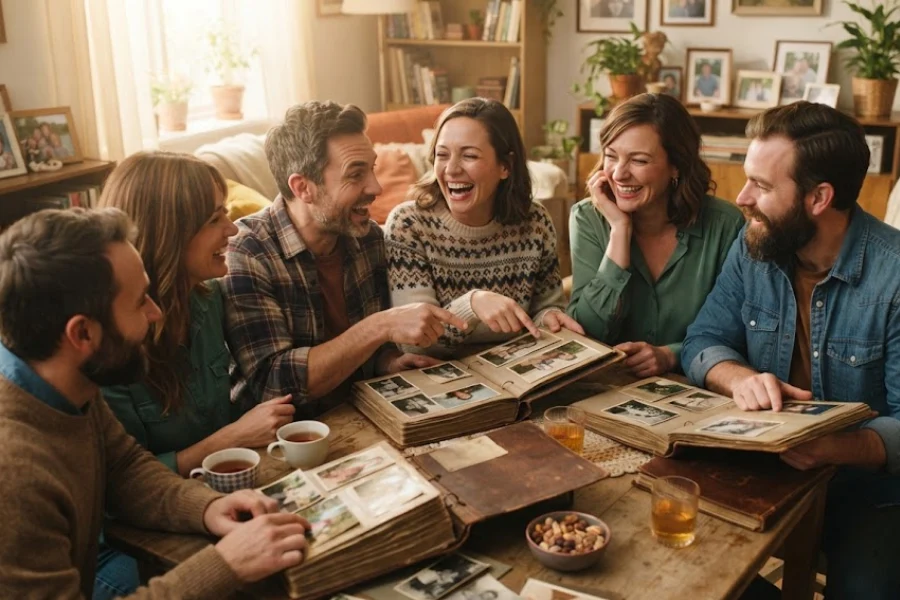
The growing popularity of childhood nostalgia parties is closely linked to the way people seek meaningful social experiences today. In an increasingly digital world, celebrations that encourage genuine interaction often leave a much stronger impression than highly polished but passive events. A nostalgic theme allows guests to reconnect not only with their past but also with one another through experiences they already understand.
Unlike a generic retro party, which may simply imitate the appearance of a previous decade, a childhood nostalgia party centers on emotional recognition. Guests do not become excited because they see an old cassette player on a shelf—they become excited because they remember recording songs from the radio, borrowing tapes from friends, or waiting patiently to rewind them with a pencil when the tape became tangled. The object itself is only a trigger; the memory behind it is what creates the emotional response.
This difference explains why nostalgia has become one of the most enduring trends in event planning. Research into consumer behavior consistently shows that familiar experiences create stronger emotional engagement than unfamiliar ones. For party planners, this means the most valuable decorations are often ordinary household objects, childhood toys, school supplies, and neighborhood snacks that guests actually encountered in everyday life rather than expensive props designed purely for display.
For businesses developing themed collections, this trend also presents an opportunity to move beyond selling individual decorations. Coordinated combinations of balloons, banners, tableware, party favors, and themed accessories create a more complete solution for retailers, event planners, and private-label brands than isolated products ever could.
What Makes a Childhood Nostalgia Party So Special?
Many people assume that a childhood nostalgia party is simply another variation of a retro-themed celebration, but the two concepts are fundamentally different.
A retro party recreates the appearance of a past decade.
A childhood nostalgia party recreates the feeling of growing up during that decade.
That distinction changes every planning decision.
Instead of asking which decorations look vintage, you begin asking which everyday moments guests are most likely to remember. Was it buying candy after school? Trading stickers during recess? Watching cartoons every Saturday morning? Riding bicycles until sunset? These ordinary routines often create much stronger emotional responses than elaborate themed displays because they represent experiences that almost everyone shared.
One of the strongest planning concepts comes from Pick a Party, where celebrations are organized around meaningful life experiences rather than isolated activities. Applied to a childhood nostalgia party, this means the event should unfold like a journey through childhood instead of feeling like a room filled with random retro objects. Every section of the venue should help guests revisit another stage of growing up, allowing memories to unfold naturally throughout the celebration.
Nostalgia Is About Shared Memories, Not Just Vintage Decorations
Imagine placing an expensive antique radio in the middle of a venue. Guests may admire it for a moment before walking away.
Now imagine placing a simple wooden school desk beside an unfinished homework notebook, a pencil case filled with colorful erasers, a stack of comic books, and a familiar cartoon quietly playing on an old television in the background. Most guests will immediately begin talking about their own classrooms, favorite teachers, childhood friends, or afternoons spent watching television after school.
The difference is not the monetary value of the objects but the memories they represent.
This is why the most successful childhood nostalgia party ideas focus on recreating familiar scenes rather than collecting vintage decorations. Guests remember environments, routines, and emotions far more vividly than decorative accessories.
Why Familiar Objects Trigger Stronger Emotional Responses
Memory psychologists have long observed that sensory experiences are closely connected with long-term memory. Sight, sound, smell, and taste often work together to retrieve memories that have remained untouched for decades.
Bijvoorbeeld:
- A favorite cartoon theme song may instantly remind guests of Saturday mornings with siblings.
- The smell of childhood candy may bring back memories of walking home from school.
- The sight of an old school backpack may remind someone of their first classroom.
- A playground whistle may immediately recall recess games with friends.
This explains why a thoughtfully designed childhood nostalgia party often feels much more immersive than celebrations that rely solely on elaborate decorations. Rather than asking guests to admire the venue, it encourages them to relive familiar experiences through multiple senses at once.
People rarely remember decorations—they remember how those decorations made them feel.
That simple principle should guide every decision throughout your childhood nostalgia party planning process, from selecting decoraties voor themafeesten to arranging interactive spaces that encourage guests to relive their happiest childhood memories.
Step 1 Choose One Childhood Era Before Planning Anything
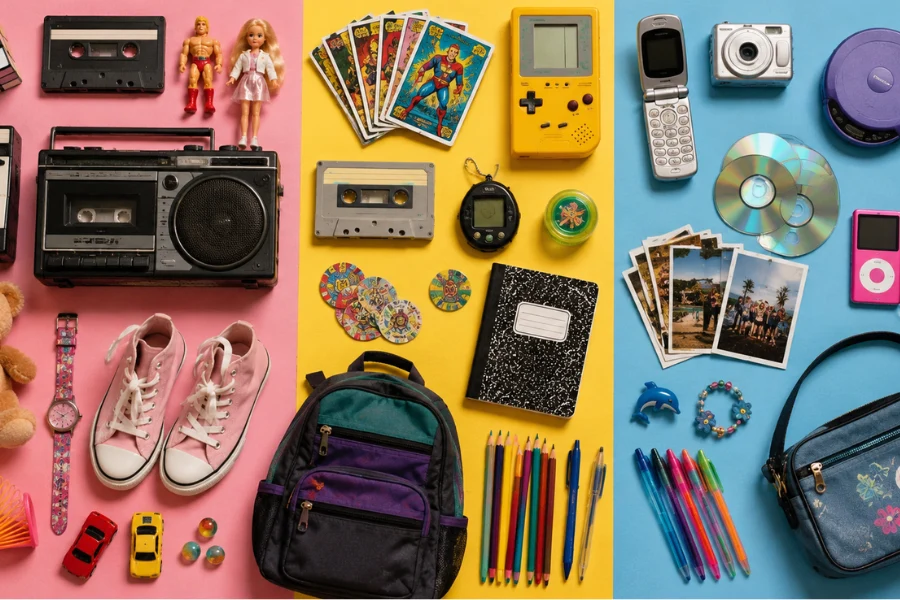
One of the biggest reasons childhood nostalgia parties fail is that they try to celebrate every generation at once. Decorations from the 1980s sit beside music from the early 2000s, while toys from different decades compete for attention. Although every item may feel nostalgic to someone, the overall experience becomes fragmented because guests constantly switch between different time periods instead of immersing themselves in one shared story.
The most memorable childhood nostalgia parties begin with a simple decision: choose one specific era and let every element support it. Whether you build your celebration around the late 1980s, the 1990s, or the early 2000s, consistency allows guests to step into a familiar world where everything—from the invitations to the playlist—feels naturally connected.
Think of your chosen decade as the setting of a movie. Every prop, costume, activity, decoration, and even your choice of decoraties voor themafeesten should belong to the same storyline.
Choose an Era Your Guests Actually Shared
Rather than selecting your personal favorite decade, consider the people attending the party.
If most guests grew up during the same period, they’ll immediately recognize the same cartoons, playground games, fashion trends, school supplies, and neighborhood snacks. Shared memories create shared conversations, which is exactly what makes a childhood nostalgia party different from an ordinary themed celebration.
Bijvoorbeeld:
1980s Childhood Party
Guests may remember cassette tapes, arcade machines, BMX bicycles, colorful windbreakers, and classic Saturday morning cartoons.
1990s Childhood Party
Think school uniforms, comic books, sticker collections, handheld game consoles, denim jackets, marbles, skipping ropes, and neighborhood convenience stores filled with familiar snacks.
Early 2000s Childhood Party
Flip phones, MP3 players, internet cafés, disposable cameras, colorful stationery, trading cards, and early computer games instantly define this generation.
Although these examples use different objects, the planning principle remains exactly the same: every detail should belong to the same chapter of childhood.
Build Every Decision Around Everyday Life
Many planners begin by searching for decorations. Instead, begin by remembering an ordinary school day.
Ask yourself questions like:
- What did children eat after school?
- Which songs played every morning?
- What games filled the playground during recess?
- What television shows were always on after homework?
- Which school supplies did everyone own?
- What objects appeared in almost every classroom or family living room?
The answers become the foundation for every later decision.
This approach creates a childhood nostalgia party that feels believable because it reflects real life rather than simply displaying vintage products.
Step 2 Build a Story Instead of Just Choosing a Theme
Most party planning guides focus on checklists—buy decorations, prepare food, organize games, and choose music. While those elements are important, they do not explain why some parties become unforgettable while others are forgotten within days.
The difference is storytelling.
One of the strongest ideas presented in Pick a Party is that successful celebrations should guide guests through meaningful life experiences instead of presenting isolated activities. Rather than treating the venue as a collection of decorative displays, the party becomes a journey that unfolds naturally from beginning to end.
In plaats van te vragen:
“What decorations should I buy?”
ask,
“What memories do I want guests to relive first?”
That single change completely transforms the planning process.
Start with Childhood Memories, Not Decorations
Imagine two different entrances.
The first features a beautiful balloon arch with colorful lighting.
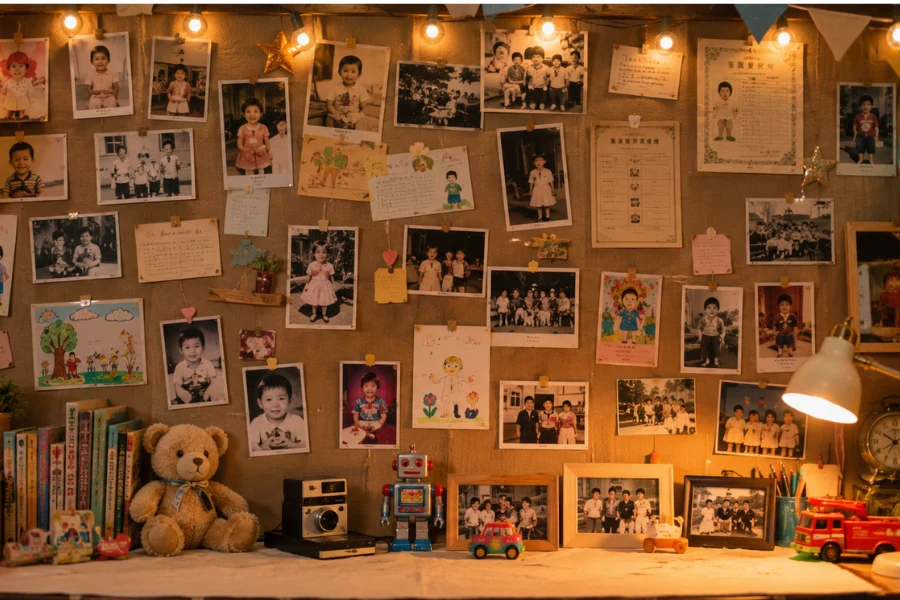
The second welcomes guests with childhood class photos, handwritten report cards, an old school bell, familiar background music, and a table where everyone writes their favorite childhood memory before entering.
Most people will remember the second entrance long after the party ends because it invites participation rather than observation.
Simple ideas that work exceptionally well include:
- A timeline of childhood photographs
- School portraits displayed in chronological order
- Family vacation albums placed on coffee tables
- A memory wall where guests write favorite playground stories
- Home videos or classic cartoons playing quietly in the background
- Childhood awards, certificates, or artwork displayed like museum exhibits
Each item encourages conversation, making the party feel personal rather than decorative.
Turn the Venue into a Journey Through Childhood
Instead of arranging decorations randomly throughout the room, divide the venue into different chapters of growing up.
Guests should feel as though they are walking through the timeline of their childhood.
The Kindergarten Corner
Inspired by the kindergarten activities described in Pick a Party, begin with bright colors, crayons, alphabet cards, children’s books, stuffed toys, and simple handmade crafts.
Decorate this area with cheerful feestballonnen, colorful banners, and playful tabletop displays that immediately communicate a fun, youthful atmosphere without overwhelming the space.
Add a “Show and Tell” table where guests can display a meaningful childhood object—a favorite toy, an old photograph, a comic book, or even a treasured school badge—and spend a few minutes explaining why it mattered.
This activity works remarkably well because it encourages guests to contribute their own memories instead of simply observing the decorations.
The Classroom Years
Continue into an elementary school setting with wooden desks, chalkboards, exercise books, rulers, pencil cases, and colorful classroom posters.
Scatter unfinished homework pages, folded paper airplanes, and doodled notebooks across the desks to recreate the everyday atmosphere of school life rather than a perfectly staged classroom.
A few nostalgic feestvlaggen designed to resemble classroom signs or school event decorations can subtly reinforce the setting without distracting from the authentic environment.
The Playground
The next area should feel energetic and familiar.
Draw hopscotch on the floor using colorful tape or chalk. Hang skipping ropes on hooks instead of placing them in storage boxes. Scatter marbles, spinning tops, bean bags, shuttlecocks, and paper airplanes where guests naturally discover them while walking through the venue.
Unlike modern entertainment, these games encouraged face-to-face interaction, making them perfect for today’s nostalgic gatherings.
After-School Life
Finish the journey with a neighborhood convenience store, family living room, or small arcade.
Shelves filled with childhood snacks, comic books, board games, cassette players, televisions showing classic cartoons, and retro game consoles recreate the places where countless childhood afternoons were spent.
When guests naturally move from one area to another, they aren’t simply looking at decorations—they’re reliving an entire chapter of growing up.
Why Storytelling Creates Stronger Memories Than Decorations
Psychologists often describe memory as a sequence of connected experiences rather than isolated images.
A single toy may be forgotten quickly.
A room that recreates buying candy after school, rushing home to watch cartoons, and meeting friends at the playground activates multiple memories at once.
That is why the best childhood nostalgia party ideas always combine:
- Familiar places
- Everyday objects
- Interactive activities
- Shared stories
- Emotional experiences
Decoration becomes only one part of a much larger narrative.
For retailers, event planners, and party brands, this storytelling approach also creates stronger product collections. Coordinating balloons, banners, tableware, party favors, rekwisieten voor fotohokjes, and themed accessories around one consistent childhood story helps customers build a complete celebration instead of purchasing unrelated decorations individually.
Step 3 Design Immersive Spaces That Feel Like Real Childhood
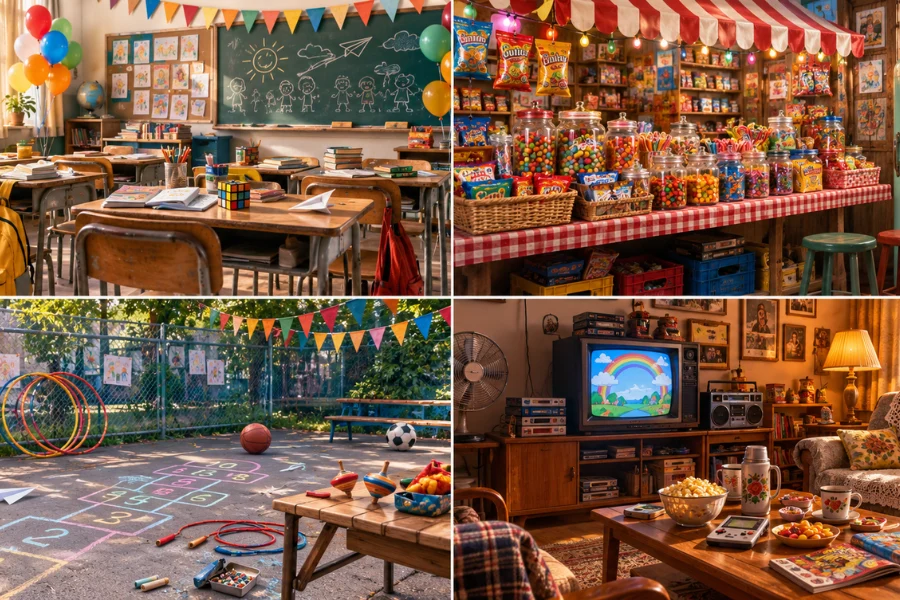
One reason many childhood nostalgia parties feel disappointing is that they focus on displaying nostalgic objects instead of recreating nostalgic places. Guests may appreciate a shelf filled with vintage toys, but they connect much more deeply with environments that resemble places they actually visited while growing up.
This difference is important. People rarely remember individual decorations in isolation—they remember where those decorations existed. A chalkboard recalls a classroom. A candy jar recalls the neighborhood convenience store. A worn sofa beside an old television recalls evenings spent watching cartoons with siblings.
In plaats van te vragen: “What decorations should I buy?”, ask, “What places do my guests remember most?”
Once you begin planning around places rather than products, the entire childhood nostalgia party becomes more immersive and emotionally engaging.
Recreate a Neighborhood Convenience Store
Almost everyone remembers stopping by a small convenience store after school with friends. It wasn’t just a place to buy snacks—it was where children compared pocket money, debated which candy to buy, traded collectible cards, and spent precious minutes before heading home.
Rather than creating a generic snack table, recreate that entire experience.
Use simple wooden shelves, wire baskets, handwritten price cards, vintage beverage crates, and clear glass candy jars to display nostalgic treats. Complete the display with colorful feestservies for snack stations and a few nostalgic feestvlaggen to recreate the atmosphere of a neighborhood shop instead of a retail display.
To make the experience interactive, give every guest a small amount of “play money” when they arrive. Throughout the party, they can exchange it for snacks, small toys, or collectible souvenirs. This simple activity recreates the excitement of childhood decision-making while encouraging guests to explore every corner of the display.
For retailers and event planners, this type of immersive setup also demonstrates how coordinated collections of decorations, tableware, favors, and display accessories create significantly more value than selling individual products separately.
Bring the Classroom Back to Life
Few places hold as many shared childhood memories as the classroom. It was where friendships formed, mistakes were made, competitions unfolded, and countless unforgettable moments took place.
Inspired by the kindergarten activities described in Pick a Party, recreate a classroom that feels lived in rather than perfectly organized.
Instead of arranging everything neatly, leave open notebooks on desks, scatter colored pencils beside unfinished drawings, place folded paper airplanes in corners, and pin children’s artwork across bulletin boards.
Small imperfections make the room feel authentic because they resemble everyday school life.
Rather than asking guests simply to admire the classroom, encourage them to participate.
A “Show and Tell” session works particularly well. Invite each guest to bring one meaningful childhood object—a toy, school badge, comic book, photograph, or handmade craft—and spend a few minutes explaining why it mattered.
What begins as a simple activity often turns into the most memorable conversation of the entire event because every object carries a unique personal story.
Build a Playground Instead of a Game Corner
Many party planners place several games on a table and call it a playground.
Real playgrounds were never like that.
Children didn’t gather around equipment—they gathered around each other.
When recreating a playground, think about movement rather than decoration.
Mark hopscotch on the floor using colorful tape or chalk. Hang skipping ropes on hooks instead of placing them in storage boxes. Scatter marbles, spinning tops, bean bags, shuttlecocks, and paper airplanes where guests naturally discover them while walking through the venue.
Set up a dedicated photo corner using nostalgic rekwisieten voor fotohokjes so guests can recreate school photos, playground moments, and childhood friendships. Unlike traditional photo booths, these props become part of the storytelling rather than simply serving as decorations.
Allow games to happen spontaneously instead of announcing every activity from a schedule.
The objective isn’t to entertain guests with organized competitions every ten minutes. It’s to recreate the feeling of walking into a school playground where everyone naturally found something to do.
This type of environment encourages interaction without forcing it, making conversations develop much more naturally.
Create a Living Room Everyone Remembers
Some of childhood’s strongest memories happened at home.
A simple living room can become one of the most emotionally powerful spaces in your childhood nostalgia party because it reminds guests of quiet evenings spent with family.
Imagine entering a room containing:
- A wooden television cabinet quietly playing classic cartoons
- A cassette player beside neatly stacked tapes
- Comic books scattered across a coffee table
- Old family board games waiting to be opened
- Soft lighting similar to a typical family living room
- Simple furniture instead of elaborate displays
Very little needs to happen in this space.
Guests naturally sit down, browse comic books, hum along with familiar theme songs, or begin telling stories about their own families.
Unlike highly decorated photo zones, this environment encourages people to slow down and reconnect.
Step 4 Use Decorations as Memory Triggers, Not Visual Fillers
One of the biggest misconceptions about planning a childhood nostalgia party is believing that more decorations automatically create more nostalgia.
In reality, the opposite is often true.
When every wall is covered with themed decorations, guests quickly stop noticing them. However, one carefully chosen everyday object placed in the right setting can instantly trigger vivid memories.
The purpose of decoration is not to impress guests—it is to activate memory.
Everyday Objects Tell Better Stories Than Expensive Props
Consider these two scenarios.
The first features a professionally designed balloon wall covered with dozens of colorful decorations.
The second contains an old wooden school desk with an unfinished math workbook, a sharpened pencil, a ruler covered in scratches, a comic book hidden beneath the notebook, and a small backpack hanging from the chair.
Most people will spend far more time looking at the second display because it feels familiar.
They begin remembering their favorite classmates, forgotten homework, classroom jokes, and afternoons spent drawing in the margins of exercise books.
Ordinary objects create extraordinary memories because they represent experiences people genuinely lived through.
Pair these authentic scenes with carefully selected feestballonnen and complementary decoraties voor themafeesten rather than overwhelming every corner with excessive props. A restrained approach feels far more believable and allows the nostalgic objects themselves to become the center of attention.
Excellent memory-triggering decorations include:
- School bags hanging beside classroom doors
- Enamel mugs used at breakfast
- Wooden rulers with handwritten names
- Bicycle baskets filled with comic books
- Cassette tapes stacked beside old radios
- Lunch boxes with familiar designs
- Chalkboards covered in playful handwriting
- Family photo albums left open on coffee tables
None of these items are expensive.
Their value comes entirely from the memories attached to them.
Design Scenes Instead of Decorating Walls
A common mistake is decorating every available surface.
Instead, build complete scenes.
For example, rather than hanging posters on a wall, recreate an actual study corner complete with homework, textbooks, stationery, reading lamps, and a half-finished art project.
Instead of displaying old toys on shelves, arrange them as though children had just stepped away for dinner and would return at any moment.
These realistic environments invite guests to imagine themselves inside the scene rather than simply looking at decorations from a distance.
Less Decoration, More Story
One principle runs throughout the best childhood nostalgia party ideas:
Every decoration should answer one question: “What memory does this help guests relive?”
If the object doesn’t contribute to a story, it probably doesn’t need to be there.
By focusing on meaningful scenes rather than excessive decoration, your party becomes more authentic, more immersive, and ultimately far more memorable. For retailers, distributors, and private-label brands, coordinating balloons, banners, tableware, favors, and themed decorations into one cohesive collection also creates a stronger shopping experience than offering individual products separately.
Step 5 Plan Childhood Games That Spark Conversations, Not Just Competition
Games are often treated as a way to fill time between meals and cake cutting, but at a childhood nostalgia party they serve a much more important purpose. The best activities recreate the spontaneous interactions that defined childhood rather than encouraging guests to compete for prizes.
Think back to your own school years. Most playground games had simple rules, required very little equipment, and allowed new players to join at any moment. That simplicity made them memorable because the focus was never on winning—it was on laughing together, solving disagreements, and creating stories that were retold for years afterward.
A successful childhood nostalgia party should capture that same atmosphere.
Bring Back Playground Favorites Everyone Already Knows
Unlike modern party games that require lengthy explanations, classic childhood games are instantly recognizable. Guests rarely need instructions because they learned the rules decades ago.
Excellent choices include:
- Hopscotch
- Jump rope
- Marbles
- Paper airplanes
- Zitzakken gooien
- Shuttlecock kicking
- Four square
- Tug of war
- Rubber band jumping
- Spinning tops
Instead of scheduling these games one after another, create an open playground where guests naturally discover different activities throughout the event.
Enhance the experience with a nostalgic photo station featuring rekwisieten voor fotohokjes so guests can recreate school memories, playground adventures, and childhood friendships while capturing fun keepsake photos.
This relaxed format mirrors real childhood far more closely than organizing a strict competition every fifteen minutes.
Turn Memories Into Interactive Activities
Physical games are only one part of childhood nostalgia.
Some of the most meaningful moments happen when guests begin sharing stories.
Create activities that encourage conversation, such as:
Guess the Cartoon Theme Song
Play just a few seconds of familiar television themes and let guests identify the show. As soon as someone recognizes the music, stories about favorite characters and weekend routines usually follow naturally.
Lunch Box Memory Challenge
Display several classic lunch boxes or school supplies from the chosen decade and ask guests which one they owned first.
Childhood Photo Guessing Game
Invite everyone to bring one childhood photograph before the party. Display them anonymously on a wall and let guests match each picture with the correct person.
School Report Card Awards
Create humorous certificates celebrating childhood personalities, such as:
- Class Clown
- Fastest Homework Finisher
- Playground Champion
- Most Likely to Trade Snacks
- Best Cartoon Expert
Because the awards are lighthearted and familiar, they encourage laughter rather than competition.
Why These Games Feel So Different
Modern party entertainment often focuses on creating excitement.
Childhood games create something more valuable: recognition.
Guests don’t enjoy hopscotch because the rules are entertaining.
They enjoy it because they remember who taught them to play, where they played after school, and which friends always won.
The activity becomes a bridge to personal memories.
That emotional connection is what transforms an ordinary game into one of the highlights of a childhood nostalgia party.
Step 6 Serve Food That Tastes Like Childhood
If decorations appeal to the eyes and music reaches the ears, food completes the experience by activating one of the strongest memory triggers of all: taste.
Many people can instantly remember a particular summer afternoon simply by tasting a familiar candy or smelling popcorn from an old cinema. Scientists have long recognized that taste and smell are closely connected to emotional memory, which explains why nostalgic foods often create stronger reactions than expensive decorations.
Instead of planning a sophisticated menu, think about what children actually enjoyed eating.
The goal is not gourmet dining.
The goal is familiarity.
Recreate the After-School Snack Experience
One of the easiest ways to achieve this is by designing an after-school snack station.
Rather than arranging food like a formal buffet, display it the way guests remember seeing it in neighborhood stores or family kitchens.
Use glass candy jars, small baskets, paper bags, vintage drink bottles, colorful wrappers, and coordinated feestservies to recreate a relaxed shopping atmosphere while maintaining a polished presentation.
Depending on the decade you’ve chosen, include items such as:
- Classic candies
- Chocoladerepen
- Potato chips
- Fruit-flavored drinks
- Ice pops
- Cookies
- Bubble gum
- Instant noodles
- Traditional homemade snacks
- Popular childhood desserts
Presentation matters just as much as the food itself.
Guests should feel as though they’ve walked into the convenience store they visited every afternoon after school.
Don’t Forget Homemade Favorites
Not every childhood memory comes from packaged snacks.
Many people remember the foods prepared by parents or grandparents far more vividly than anything purchased from a store.
Depending on your guests’ cultural background, consider serving simple homemade dishes that were commonly enjoyed after school or during family weekends.
These familiar meals often become conversation starters because everyone remembers a slightly different version from home.
Drinks Can Be Nostalgic Too
Instead of elaborate cocktails, serve beverages that guests drank growing up.
Glass soda bottles, flavored milk, fruit juice boxes, lemonade, hot chocolate, or simple homemade drinks often fit the theme much better than modern specialty beverages.
Displaying them in coolers or vintage refrigerators further strengthens the nostalgic atmosphere.
Design a Dessert Table Around Memories
The dessert table doesn’t need to be extravagant.
A simple display featuring childhood favorites often feels much more authentic.
Bijvoorbeeld:
- Cupcakes decorated with cartoon colors
- Cookies shaped like school supplies
- Candy jars arranged by color
- Ice cream station with classic toppings
- Birthday cake inspired by favorite cartoons or school memories
Rather than focusing entirely on appearance, think about which desserts guests actually remember asking for when they were children.
That emotional connection makes even simple treats feel special.
Step 7 Use Music and Dress Codes to Complete the Experience
Many planners leave music until the final stages of preparation, but in reality it should be planned alongside the decorations.
Music acts as an invisible decoration.
Guests may not consciously notice every song, yet familiar melodies quietly influence the atmosphere throughout the event.
The best playlist follows the same decade you’ve chosen for the party.
Include:
- Cartoon theme songs
- Television opening music
- Popular childhood pop songs
- School assembly music
- Commercial jingles everyone remembers
- Movie soundtracks from childhood
Avoid filling the playlist only with chart hits.
Sometimes a forgotten television commercial or cartoon opening creates a stronger emotional reaction than the biggest song of the decade.
Encourage Everyday Childhood Fashion
Costumes often intimidate guests because they worry about accuracy.
Instead of asking everyone to wear elaborate outfits, encourage them to recreate what they actually wore as children.
Ideeën zijn onder andere:
- School uniforms
- Denim jackets
- Colorful sneakers
- Cartoon T-shirts
- Overalls
- Tracksuits
- Hair accessories popular during the chosen decade
These familiar styles feel comfortable while helping guests become part of the overall storytelling experience.
Because the clothing reflects everyday life rather than theatrical costumes, photographs also appear far more authentic.
By the time guests have explored nostalgic spaces, played familiar games, enjoyed childhood snacks served with coordinated feestservies, listened to classic music, and dressed like their younger selves, the celebration no longer feels like a themed event—it feels like stepping back into one of the happiest chapters of life.
Step 8 Choose Party Favors Guests Will Actually Keep
A party favor should feel like the final page of the story rather than an item guests forget on the way home. While inexpensive novelty gifts may work for children’s parties, a childhood nostalgia party deserves something more meaningful—something that reminds guests of the memories they shared long after the celebration ends.
The most memorable party favors are simple, personal, and connected to the theme. Instead of selecting random souvenirs, choose gifts that naturally extend the nostalgic experience.
Ideeën zijn onder andere:
- Mini candy jars filled with childhood sweets
- Personalized notebooks inspired by old exercise books
- Retro-style keychains
- Cartoon sticker packs
- Friendship bracelets
- Vintage-style bookmarks
- Small toy capsules
- Customized photo magnets featuring pictures from the party
Package these gifts in coordinated take-away party favor bags or nostalgic cadeauverpakking inspired by lunch boxes, school bags, or classic candy boxes. Thoughtful packaging not only enhances the guest experience but also makes the favors feel like treasured keepsakes rather than ordinary giveaways.
Create a Simple Planning Timeline
Planning a childhood nostalgia party becomes much easier when tasks are completed gradually rather than all at once. A clear timeline also reduces the chance of overlooking important details.
Six to Eight Weeks Before
Choose the childhood era, determine your budget, confirm the guest list, reserve the venue if necessary, and send invitations that immediately introduce the nostalgic theme.
Four Weeks Before
Finalize decorations, order themed products, prepare activity materials, confirm entertainment, and begin collecting childhood photographs or videos for display.
Two Weeks Before
Purchase snacks, organize party favors, prepare memory cards, and double-check that every decoration supports the same storyline.
One Week Before
Test music equipment, arrange each nostalgic zone according to your planned guest journey, prepare food displays, and confirm that all games and activities are ready.
Party Day
Instead of rushing to complete last-minute decorations, focus on creating the atmosphere. Play background music before guests arrive, place nostalgic objects where they can be discovered naturally, and encourage guests to begin sharing childhood stories from the moment they enter.
Budget Ideas for Different Party Sizes
One of the biggest advantages of a childhood nostalgia party is that emotional impact does not depend on an expensive budget. Many of the most memorable decorations are ordinary household items that guests immediately recognize.
Small Gathering
A living room, garage, or backyard can easily become a nostalgic setting using family photographs, homemade decorations, favorite snacks, and classic playground games.
Medium-Sized Celebration
For birthdays, reunions, or community events, combine balloons, banners, themed tableware, photo booth props, and coordinated party favors to create multiple interactive memory zones while keeping the overall design consistent.
Large Community or Outdoor Event
Larger celebrations benefit from dividing the venue into several nostalgic spaces connected by one clear storyline. If the party takes place in a park, school playground, or other open venue, combining nostalgic decorations with coordinated feestbenodigdheden voor buiten helps create a comfortable environment while maintaining the immersive childhood theme.
Regardless of budget, authenticity should always take priority over quantity. Guests remember meaningful experiences far more vividly than expensive decorations.
Common Mistakes That Can Ruin a Childhood Nostalgia Party
Even beautifully decorated venues can fail to create nostalgia if the overall experience lacks consistency.
One common mistake is mixing too many decades together. Combining toys, music, fashion, and cartoons from different generations often confuses guests instead of helping them relive shared memories. Choosing one clearly defined era creates a much stronger emotional connection.
Another mistake is treating decorations as the main attraction. While visual elements are important, they should support conversations rather than replace them. A room filled with vintage props becomes far more meaningful when guests are encouraged to interact with the environment through storytelling, games, and shared experiences.
Some planners also underestimate the importance of background music. Silence between activities can quickly reduce the atmosphere, whereas familiar television themes, school songs, and childhood soundtracks quietly reinforce the nostalgic mood throughout the event.
Finally, avoid making everything look too perfect. Childhood was rarely perfectly organized. A slightly messy classroom, comic books left open on a table, unfinished homework, or scattered toys often feel much more believable than carefully staged displays because they recreate real memories instead of artificial scenes.
Childhood Nostalgia Party Planning Checklist
Before your celebration begins, make sure you’ve completed the essentials:
- Choose one childhood era and keep every element consistent.
- Build the celebration around a story instead of individual decorations.
- Recreate familiar places such as classrooms, playgrounds, neighborhood stores, or family living rooms.
- Prepare nostalgic snacks and drinks guests genuinely remember.
- Organize interactive games that encourage conversation rather than competition.
- Create a playlist featuring cartoons, television themes, and popular childhood songs.
- Encourage guests to dress in everyday childhood fashion rather than elaborate costumes.
- Prepare memorable party favors with nostalgic packaging.
- Design opportunities for guests to share stories through memory walls, childhood photographs, or “Show and Tell” activities.
When these elements work together, the celebration becomes much more than a themed party—it becomes a shared journey through childhood that guests will continue talking about long after the event has ended.
Create Memorable Childhood Nostalgia Parties with Coordinated Decorations
Whether your customers are planning birthdays, school reunions, community celebrations, or nostalgic themed collections for retail, building a successful childhood nostalgia party requires more than individual decorations. Coordinated products help create a consistent experience while simplifying planning for both businesses and consumers.
Nicro offers a comprehensive range of wholesale verjaardagsfeestbenodigdheden, including balloons, banners, themed decorations, tableware, photo booth props, party favors, gift packaging, and customizable product collections. Designed for distributors, retailers, event supply companies, and private-label programs, these coordinated solutions make it easier to develop market-ready collections that capture the warmth, familiarity, and emotional connection at the heart of every memorable childhood nostalgia party.
Veelgestelde vragen
What is a childhood nostalgia party?
A childhood nostalgia party recreates the everyday experiences people remember from growing up rather than simply decorating with vintage items. Through familiar places, music, games, food, and storytelling, guests are encouraged to relive shared memories and reconnect with one another.
How do I choose the best decade for a nostalgia party?
Select the decade that most of your guests experienced during childhood. Building every decoration, activity, snack, and playlist around one consistent era creates a far more immersive experience than combining multiple generations.
What are the best decorations for a childhood nostalgia party?
The most effective decorations recreate familiar environments instead of displaying random vintage objects. Classrooms, playgrounds, neighborhood convenience stores, family living rooms, and after-school study spaces usually create much stronger emotional connections than decorative props alone.
Which games work best for adults at a childhood nostalgia party?
Simple playground games such as hopscotch, jump rope, marbles, paper airplanes, and bean bag toss remain popular because guests already know how to play them. Interactive memory games, childhood photo challenges, and cartoon music quizzes also encourage meaningful conversations.
How can I make a childhood nostalgia party feel authentic?
Focus on recreating everyday life instead of building a picture-perfect display. Familiar music, homemade snacks, ordinary household objects, handwritten notes, childhood photographs, and opportunities for guests to share personal stories often create the strongest nostalgic experience because they reflect real memories rather than staged scenes.

- Wat zijn zelfopblaasbare ballonnen? Hoe ze werken, voordelen en een gids voor groothandelsaankopen - 31 juli 2026
- Hoe organiseer je een feestje in het teken van jeugdherinneringen: decoraties, spelletjes, eten en tijdloze ideeën - 30 juli 2026
- Ideeën voor een ‘Ugly Sweater’-feest: decoraties, spelletjes en een gids voor feestartikelen in de groothandel - 30 juli 2026




 English
  Spanish
  German
  French
  Dutch
Dutch  Italian
  Japanese
  Korean