
Pool balloon decoration performs differently from indoor balloon setups. Heat, wind, water exposure, and surface reflection change how materials behave.
If you’re sourcing for retail programs, corporate pool events, hospitality venues, or seasonal promotions, decoration style is only one variable. Environmental exposure determines performance, replacement rate, and total cost.
This guide explains how to select pool balloon materials and structures based on real-world outdoor conditions.
Step 1 – Define Exposure Duration Before Choosing Material
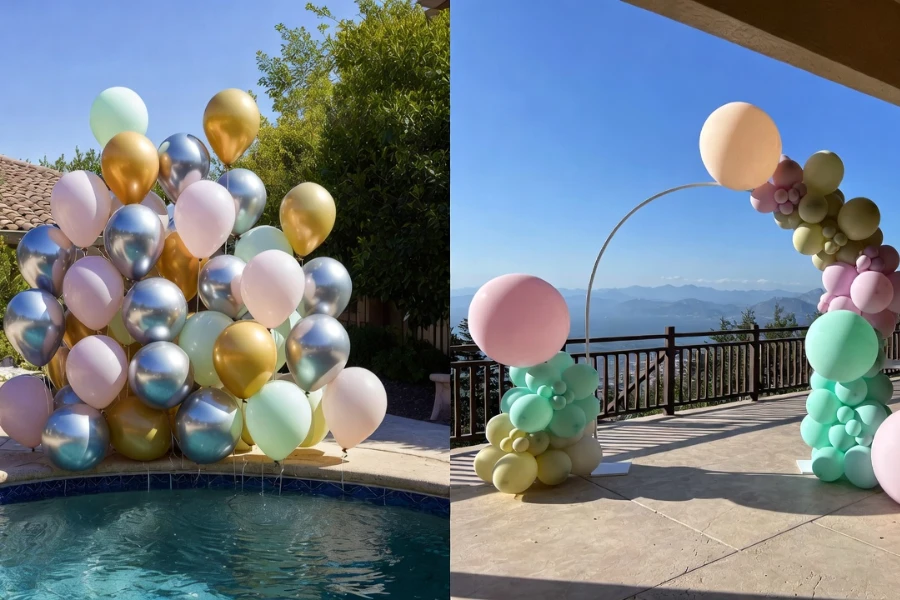
Exposure duration is the first filter.
Ask one question first
How long must the installation remain intact
Single-Day Event – Up to 6 Hours
Standard latex balloons are acceptable
Helium can be used in controlled quantities
Light colors reduce heat absorption
Air-filled garlands provide stability
For short events, moderate expansion risk is manageable. Replacement risk remains low if balloons are properly underinflated.
Multi-Day Outdoor Display – 24 to 72 Hours
Avoid free-floating helium balloons
Use air-filled structural installations
Consider thicker latex or bubble balloons
Secure anchoring is required
In direct sunlight above 30°C, thin latex balloons can expand significantly within two to three hours. Underinflating by approximately 5–8% reduces expansion stress and pop rates.
The bottom line – longer exposure eliminates helium as a primary solution.
Step 2 – Evaluate Heat and Wind Conditions
Outdoor pool areas amplify environmental stress.
Heat Impact
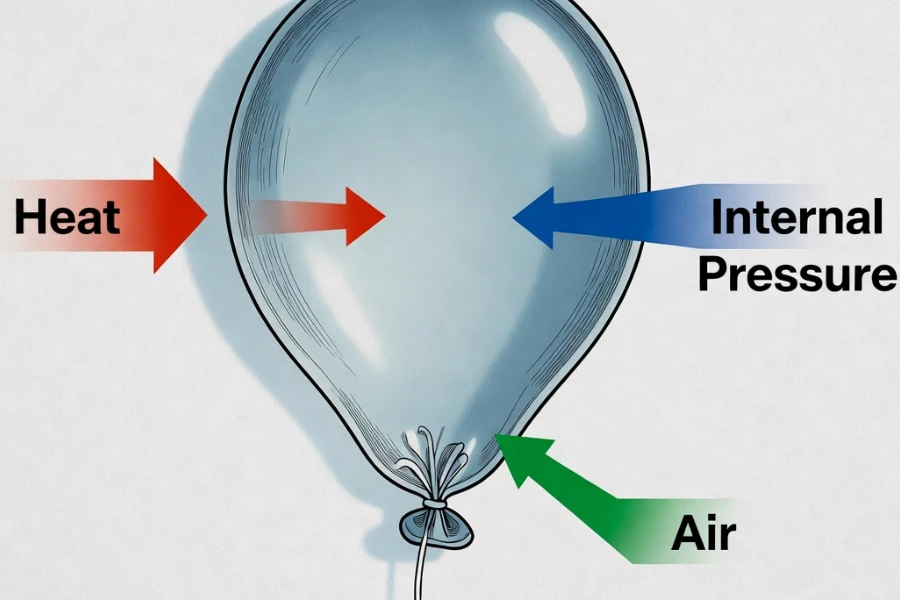
Dark colors absorb more heat
Surface reflection from water increases internal pressure
Helium expands faster than air in high temperatures
In high-heat environments, expansion is the primary failure cause.
Wind Impact
Helium balloons become unstable in moderate wind
Anchoring weight must exceed lift force
Air-filled arches provide better wind resistance
If wind is unpredictable, free-floating helium balloons increase failure probability.
For resort terraces or open-air corporate venues, air-filled structures consistently outperform helium.
Step 3 – Determine Branding Requirements
Corporate pool events and promotional campaigns require print clarity and visual consistency.
Material choice affects branding quality.
Standard Latex
Cost-effective
Suitable for short-term logo use
Surface may distort under high heat
Thicker Latex
Improved shape retention
Better print stability
Reduced pop rate
Foil Balloons
High shape definition
Strong visual presence
Suitable for photo zones
If brand visibility must remain consistent for several hours in direct sun, thicker latex or foil is more reliable than standard thin latex.
Step 4 – Understand Cost Beyond Unit Price
Unit price alone does not determine cost efficiency.
Consider
Replacement rate
Labor for reinflation
Emergency reinstallation
Shipping volume
Damage during transport
Example decision logic
If a two-day outdoor event experiences a 20% pop rate using thin latex, replacement cost often exceeds upgrading to thicker material with an 8–10% pop rate.
Lower failure rates reduce operational stress and protect brand presentation.
Durability often lowers total program cost.
Common Failure Mistakes in Pool Balloon Programs
Based on manufacturing and event feedback, the most frequent errors include
Fully inflating balloons before sun exposure
Using dark colors in peak summer conditions
Relying on helium for multi-day outdoor displays
Underestimating wind anchoring requirements
Selecting material based only on appearance
Most pool balloon failures are environmental miscalculations, not product defects.
Material Performance Comparison for Outdoor Pool Use
| Material | Heat Resistance | Wind Stability | Multi-Day Suitability | Cost Level |
|---|---|---|---|---|
| Standard Latex | Moderate | Low to Moderate | Limited | Low |
| Thicker Latex | Moderate to High | Moderate | Suitable | Medium |
| Foil | High shape retention | Moderate | Suitable | Medium to High |
| Bubble | High durability | Moderate | Strong | Higher |
The decision model is simple
Short duration favors standard latex.
Brand-sensitive or extended exposure favors thicker latex or foil.
Multi-day outdoor exposure favors air-filled structural systems.
Wholesale and Seasonal Retail Considerations
If you manage seasonal pool decoration programs or distribute pool balloon kits, supply chain factors become critical.
Evaluate
Production yield rate
Consistency across batches
Private label packaging capability
MOQ flexibility
Lead time reliability
Stable yield reduces reorder risk during peak season. Standardized SKUs improve inventory predictability.
For distributors and event suppliers, reliability is often more important than initial unit price.
Choosing a Manufacturing Partner for Pool Balloon Programs
Outdoor pool environments demand consistent material quality and controlled production.
Manufacturing stability affects
Thickness consistency
Print alignment
Seal integrity
Batch color uniformity
For companies managing recurring events or scaling seasonal programs, supplier consistency reduces operational risk.
Nicro operates a 6000㎡ production facility with controlled quality processes and a 95% yield rate. The company supports OEM and ODM balloon programs, including custom printing and private label packaging for wholesalers, brand owners, and event suppliers.
If you’re evaluating long-term outdoor pool decoration sourcing rather than one-time purchasing, production alignment and environmental performance testing should guide your supplier decision.
Final Decision Framework
Before ordering pool balloon decorations, confirm
1 Exposure duration
2 Heat intensity
3 Wind conditions
4 Branding visibility requirements
5 Replacement tolerance
Style creates attention. Environmental performance protects margin.
For pool balloon decoration programs, selecting material based on exposure conditions rather than trend ensures better cost control and event stability.


 English
  Spanish
  German
  French
  Dutch
Dutch  Italian
  Japanese
  Korean